

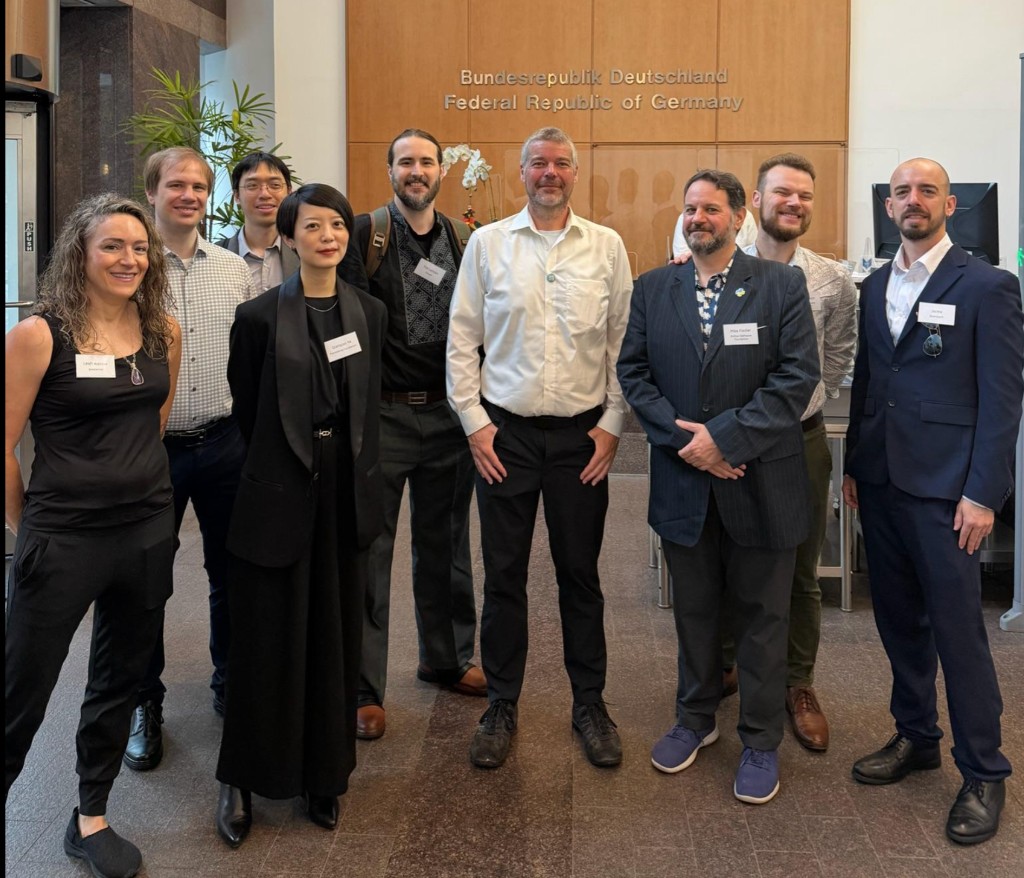
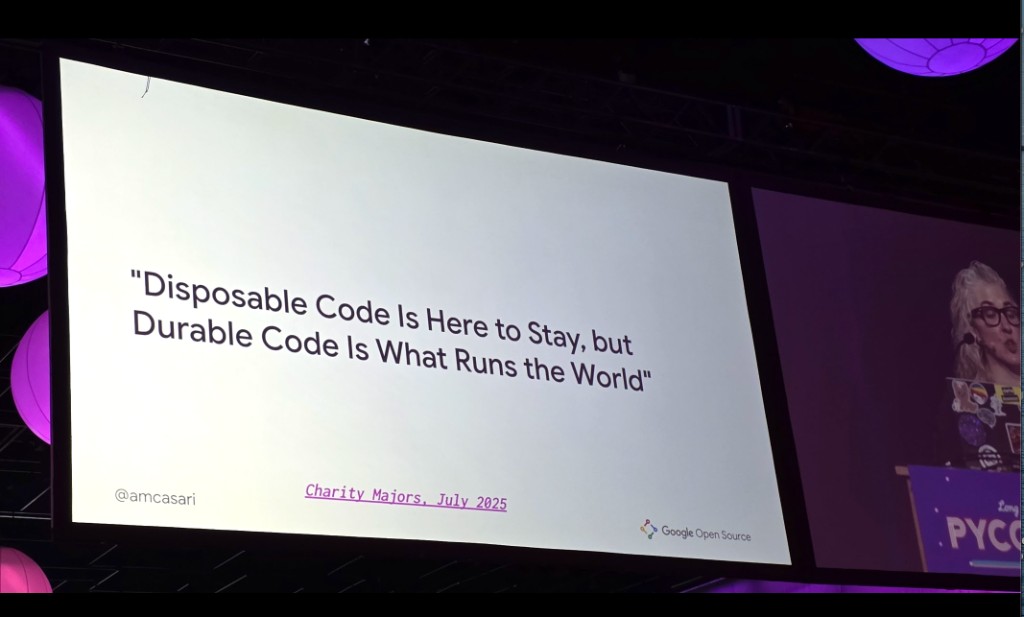
Generative AI and open source: what PyCon US 2026 taught us about the path forward
Generative AI was a dominant theme at PyCon US 2026 — not as a buzzword, but as a lived reality the Python community is actively …
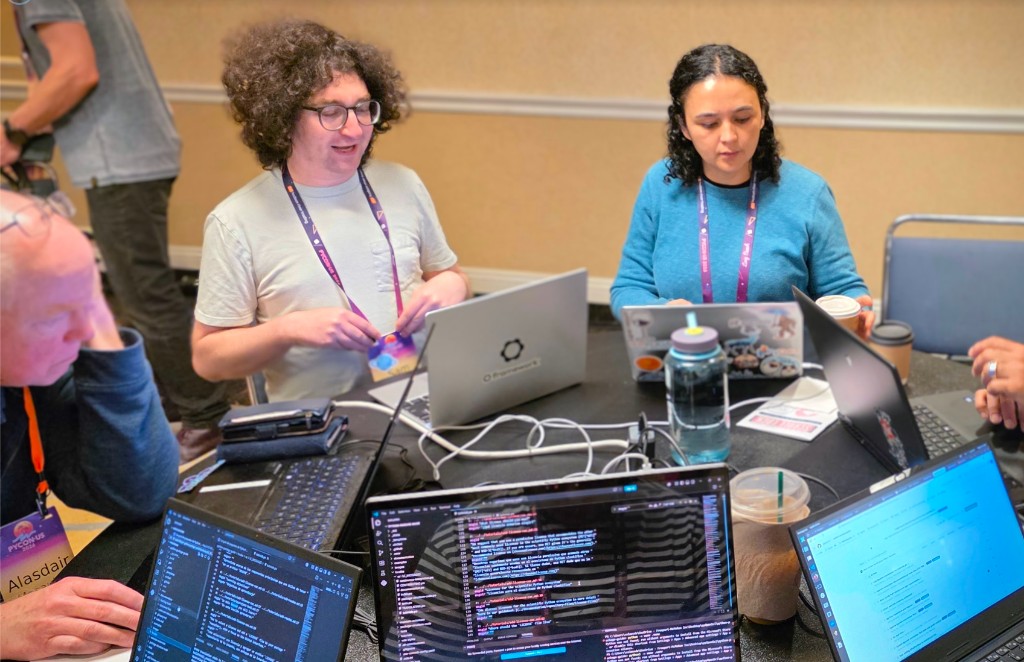
It started with one contributor and now we fill the room: pyOpenSci sprints at PyCon US 2026
Our fourth PyCon US sprint grew from a single contributor in Salt Lake City to ~20 people in Long Beach. Co-sprinting with Hatch, …

Tools Track, GenAI Bof and Roundtables: This year's PyCon US Maintainer Summit was something special
As a co-organizer of the PyCon US Maintainer Summit, Leah Wasser reflects on a milestone year—150+ maintainers, formal PyCon …
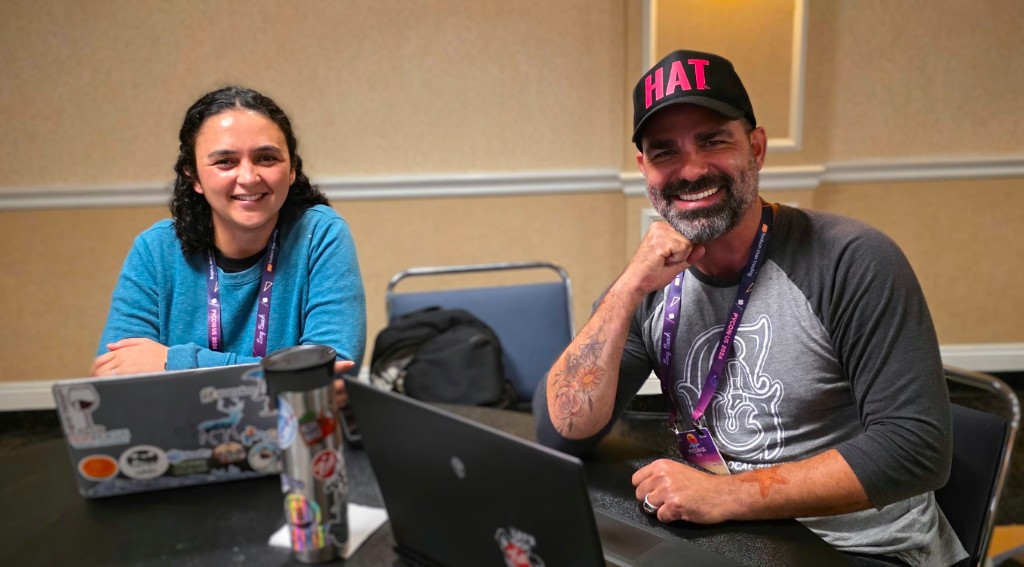
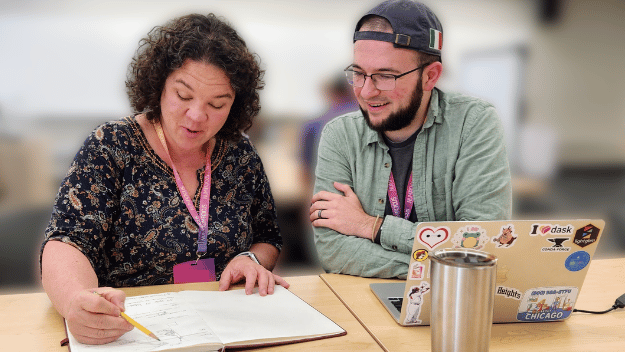
PyCon US 2026: Community, connection, and what comes next
Times are hard, but communities like pyOpenSci still show up. At PyCon US 2026 in Long Beach, we saw people connecting, sprinting, …
Ship It Cohort One: What We Built, What We Learned, and What's Next
pyOpenSci recently wrapped up the first cohort of Ship It: Python Packaging in the Generative AI Era — a 10-day async course that …

Building Resilience: pyOpenSci in 2026
pyOpenSci learned a lot about resilience in 2025. As we navigate generative AIs impact on scientific open source and shifting …
CyNetDiff: A Python Library for Accelerated Implementation of Network Diffusion Models
CyNetDiff is a Python package for accelerating network diffusion simulations, recently accepted into the pyOpenSci ecosystem.
Navigating LLMs in Open Source: pyOpenSci's New Peer Review Policy
Generative AI products are reducing the effort and skill necessary to generate large amounts of code. In some cases, this strains …
Why We Choose What We Choose
In selecting one workflow to package a Python project, pyOpenSci chooses between a lot of code tools. These choices often come …
From Surviving to Thriving: A Convening to Reclaim and Sustain Open Science Communities
Building resilience in open science starts with collaboration. Learn how pyOpenSci is partnering with the Carpentries, Prereview, …
What’s New in pyOpenSci: September Updates + Community Shoutouts
This summer brought incredible momentum to pyOpenSci—from 60+ attendees at our SciPy session to 13 packages actively under review …
Succession is Success: pyOpenSci's Executive Council Transition Marks Organizational Maturity
The Executive Council drives pyOpenSci’s mission and vision. Learn more about how the council works, and about the current …
Meet Mandy Moore, pyOpenSci’s new Communications and Community Lead!
Meet Mandy Moore, our new Communications and Community Lead! Mandy is bringing 15+ years of experience in marketing, content …

Listening, learning, and building together: what we heard at our SciPy 2025 BoF
We held an incredibly informative community session this year at the SciPy meeting in Tacoma Washington. We asked the community …
Highlights from SciPy 2025: Building Community, Code, and Culture
Explore pyOpenSci’s highlights from SciPy 2025—from Python packaging workshops and talks to first-time contributions, …
pyOpenSci at SciPy 2025 - science, Python and Community
pyOpenSci is excited to be at SciPy 2025 this year! Find us at our second packaging tutorial, a birds of a feather session and …

pyOpenSci at PyCon US 2025 - Python, Packaging and Community
pyOpenSci is excited to be at PyCon US for the third year in a row! Find us at the Maintainers summit on May 16th and then join us …
Reaffirming pyOpenSci's Commitment to Inclusion
pyOpenSci is growing a global, vibrant and inclusive open source community where everyone from all backgrounds and identities can …
Contribute to Open Source Software: It's More Than just Code
Contributing to open source isn’t just about code—it’s also about navigating social norms. Discover pyOpenSci’s new Contribute to …
How to Secure Your Python Packages When Publishing to PyPI
Learn how to secure your Python package PyPI publishing workflows and protect your package from attacks. This post covers …
Building Momentum for the Future: Reflections on Our First Open Science Festival Week
pyOpenSci ran 6 workshops in 2024, 4 of which happened during our Fall Festival! Learn more about how the workshops went and watch …
2024: A Transformative Year for pyOpenSci
2024 was a transformative year for pyOpenSci. Through training, mentorship, and peer review, we expanded our community, created …

QuadratiK: Collection of Methods Constructed using Kernel-Based Quadratic Distances
QuadratiK provides a set of goodness-of-fit tests, a clustering technique using kernel-based quadratic distances, and algorithms …
CLOSED pyOpenSci is hiring a Communications Lead
pyOpenSci is hiring a part-time Writer and Social Media Specialist to enhance communication and engagement within the scientific …

The Human Dimension to Clean, Distributable, and Documented Data Science Code
Discover how to create clean, accessible, and impactful data science code by focusing on the human side of coding practices. Here, …
pyOpenSci celebrates Inessa Pawson
Inessa’s leadership and dedication have profoundly shaped the open source community, from NumPy to NumFOCUS. Learn more about her …

A Blueprint for the Future: pyOpenSci's Sustainability Model
pyOpenSci is exploring various sustainability methods to supplement our valued grant funding. Learn more about what we are …

It's Been a Long Short Road: The Monumental Past 2 Years of pyOpenSci
Learn about what pyOpenSci has accomplished in the last two years, including the evolution of our packaging guide, the expansion …
pyOpenSci Community News: August 2024
Welcome to the first edition of pyOpenSci’s Community News newsletter, where we summarize and share conversations, contributions, …
pyOpenSci beginner-friendly sprints at PyCon US 2024
pyOpenSci holds beginner-friendly sprints with the goal of making new contributors feel welcome. Learn about our latest sprint at …

automata: Simulation and manipulation
automata is a package implementing structures and algorithms for manipulating finite automata, pushdown automata, and Turing …

SLEPLET: Slepian Scale-Discretised Wavelets in Python
SLEPLET is a tool to create Slepian scale-discretised wavelets that has recently passed the PyOpenSci review.
pyOpenSci at PyCon US 2024 - Python packaging and community
Learn about pyOpenSci’s experience at PyCon US 2024, how pyOpenSci is making Python packaging more accessible and beginner …

pyOpenSci Newsletter: June 2024
We’re starting June with a record number of Python package submissions, a call for editors, a PyCon US reflection, and some SciPy …

Volunteers needed: pyOpenSci Editorial Board
pyOpenSci is looking for volunteers from a wide array of scientific backgrounds to join our Editorial Board.

The pyOpenSci Guide to PyCon 2024
PyCon US 2024 is finally here, and we can’t wait to connect with you! This post has all of the talks, panels, summits, and …

rdata: Read R datasets from Python
rdata is a library for reading R datasets and converting them to Python objects that was recently accepted into the pyOpenSci …

Sorry This Talk Doesn't Have any ChatGPT in It: pyOpenSci peer review of Crowsetta
David Nicholson gave a lightning talk about his experience going through the pyOpenSci peer review process with his Python package …
MovingPandas: Data Structures and Methods for Movement Data Analysis
MovingPandas is an easy to use toolkit for exploring movement data that has recently passed the PyOpenSci review.
Pandera: A Statistical Data Validation Toolkit for Pandas
Pandera is a a flexible and expressive toolkit for performing statistical validation checks on pandas data structures that was …
From the Archives
pyOpenSci @ SciPy 2024 - Python Packaging Tutorials, Talks and Community :heart:
pyOpenSci had an incredibly impactful SciPy conference this year in Tacoma Washingon. I gave a talk and we lead a workshop on Python packaging and we had 39 issues and pull requests submitted during …
Read morepyOpenSci's Guide to SciPy
We’ve got another incredible conference on the horizon, and wanted to share the talks, workshops, and sprints where you can find members of the pyOpenSci community!
Read moreGet Involved with pyOpenSci
Fun fact: there are a multitude of ways for you to get involved with pyOpenSci! From social media to in-person events to joining our editoral team, this guide walks you through every opportunity …
Read moreFriends don't let friends package alone- my Python packaging talk at PyCon 2024
A blog post from the Executive Director of pyOpenSci on Python packaging, technical things and imposter syndrome in data science.
Read moreSave the Date: pyOpenSci's 2024 Open Science Fall Festival
Shake off those post-PyCon blues by adding our Open Science Fall Festival to your calendar!
Read morepyOpenSci Newsletter: May 2024
May has brought two new packages, the first (of many!) pyOpenSci workshops, all things pyOpenSci and PyCon, and several incredible speaking opportunities. Read on to learn more!
Read morepyOpenSci launches open, accessible, online educational trainings for scientists
We’re excited to share information about the pyOpenSci approach to education, open education resources, and announce an upcoming workshop focused on Python packaging
Read morepyOpenSci Newsletter: April 2024
New contributors, a new package, and a few new social campaigns, all to keep you connected with the pyOpenSci community!
Read moreCZI Funds pyOpenSci
CZI has received funding from the Chan Zuckerberg Foundation. Learn more about how this funding will support pyOpenSci over the next 2 years.
Read more👋 Hello, world! Greetings from the new pyOS Community Manager
Learn more about our new pyOpenSci Community Manager, Jesse Mostipak, in her first pyOpenSci blog post!
Read morepyOpenSci Python packaging discussion at the Research Software Engineering meeting 2023
pyOpenSci held a community birds of a feather session at the 2023 RSE meeting in Chicago where we discussed peer review and packaging pain points. Learn about the packaging pain points that they …
Read moreCLOSED: pyOpenSci is Hiring a Community Manager
This position has been filled. pyOpenSci is hiring a community manager. This position will oversee numerous aspects of pyOpenSci’s community building efforts including managing social media, our slack …
Read moreShark Attacks and Open Science - pyOpenSci @ SciPy 2023 Meeting
The SciPy 2023 meeting did not disappoint this year. We have a whole new group of contributors helping to build this vibrant and diverse Python open science community. Learn about my experience there.
Read moreMy First Time Attending PyCon - A Tale of Sprints and Python Packaging
This year I attended by first PyCon US meeting representing pyOpenSci. In this blog I talk about my experience, highlighting the sprints we lead and talks on packaging.
Read moreDemystifying the Python packaging ecosystem
pyOpenSci has published the packaging structure and tool section of it’s guide. This chapter has been reviewed by dozens of core community members to ensure accuracy and is community-driven.
Read moreWhat Makes a Python Open Source Package Healthy? A Conversation on Twitter.
How should pyOpenSci measure Python open source package health and level of maintenance and usability? Here I summarize a conversation held on twitter around this very topic. Feedback is welcome!
Read moreWhy Python package health metrics are a priority for pyOpenSci and other open source communities
Collecting baseline data that aligns with the goals and outcomes of your project, program or organization is critical to do at the beginning. Here I briefly explain why Python package health metrics …
Read moreWhy should Python open source package health matter to scientists? (and to you!)
Free and open source software tools are the foundation for thousands if not millions of scientific workflows. Yet, it is rare that users fully understand it’s importance in moving science forward. …
Read morepyOpenSci Editorial Process - New Editor in Chief and a Call For Editors
pyOpenSci is developing its open peer review process for Python scientific software. Learn about our structure and if you are interested, apply to be on our editorial board.
Read moreBig Changes for pyOpenSci: an update from the new Executive Director, Leah Wasser
pyOpenSci has recently transitioned to a fiscal sponsor and has a new executive director - Leah Wasser. Learn more about our goals over the next few years and how to get involved with the community.
Read morePyOpenSci at AGU 2019: Join Us
Several pyOpenSci and Open Source Software events will occur at AGU 2019. Come learn more about open source Python tools for science.
Read moreWelcome to the pyOpenSci Blog!
pyOpenSci is a community organization devoted to the development of robust open source Python software to support science.
Read moreclean-hugo theme: blog formatting and shortcode reference
A living reference for every shortcode and formatting option available in the clean-hugo theme — figures, admonitions, admonition quotes, blockquotes, pull quotes, feature quotes, buttons, YouTube …
Read more