
Building Resilience: pyOpenSci in 2026
Jan 22, 2026 • Community
pyOpenSci learned a lot about resilience in 2025. As we navigate generative AIs impact on scientific open source and shifting funding landscapes, pyOpenSci is building resilience through training, sponsorship, and community-centered leadership. Learn more about our plan.
The world has changed
I’m not going to sugarcoat it—2025 was hard.
Watching organizations like the Python Software Foundation turn down million-dollar National Science Foundation (NSF) grants because DEIA work was no longer supported made something painfully clear: the funding landscape that has grounded so many of us is no longer reliable.
At the same time, Generative AI fundamentally changed how open source work happens. Maintainers found themselves reviewing more code than ever—much of it machine-generated—while navigating ethical questions about authorship and responsibility they didn’t sign up to solve on their own.
For many of us, the ground felt unstable—not just months out, but sometimes day to day.
And yet, something important happened.
Instead of pulling back, the pyOpenSci community leaned in. People showed up for each other. They reviewed, mentored, taught, organized, and adapted—often quietly, often while navigating uncertainty of their own.
The moment that changed everything
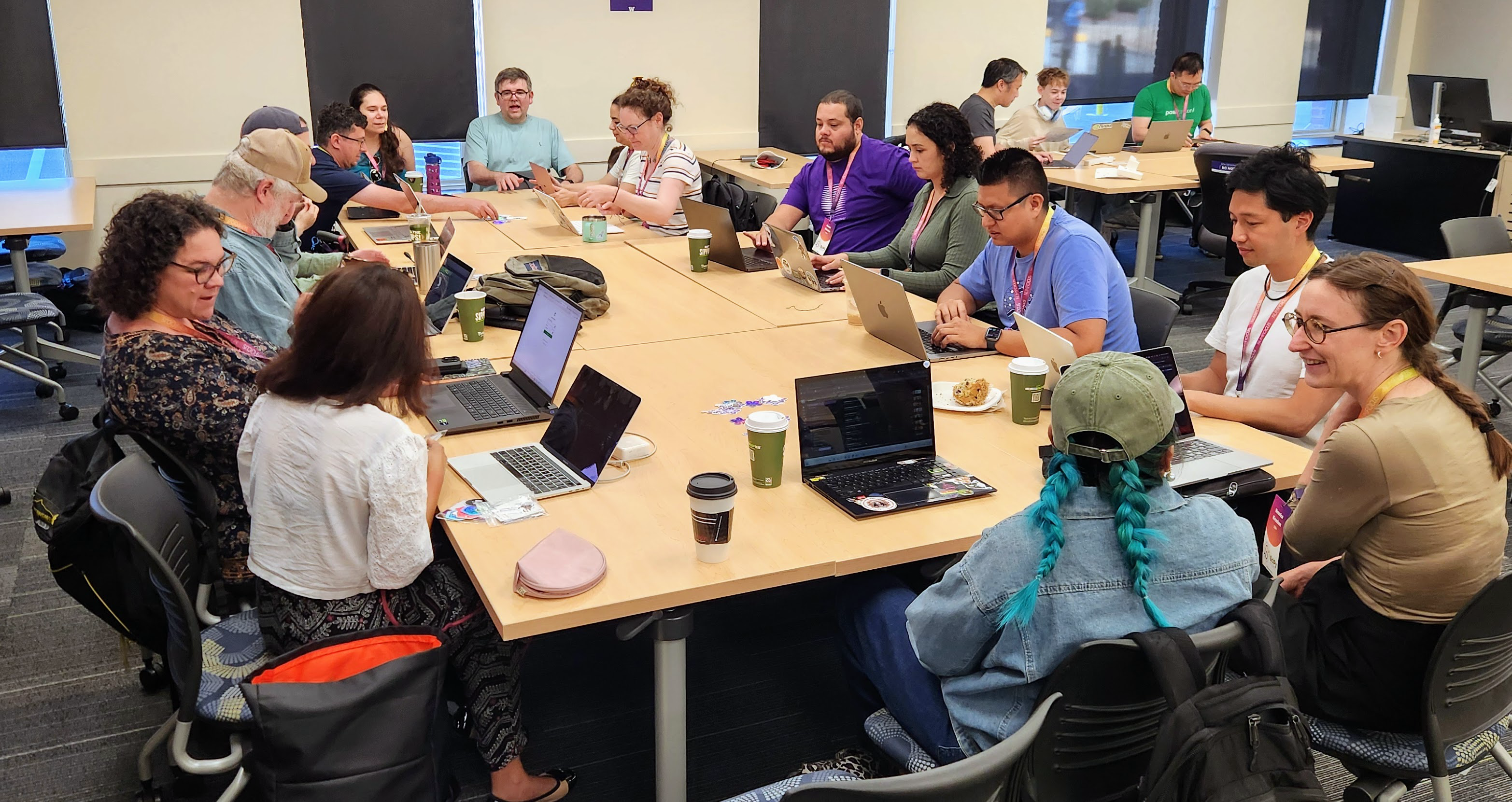
One moment from 2025 keeps coming back to me: our sprint at SciPy.
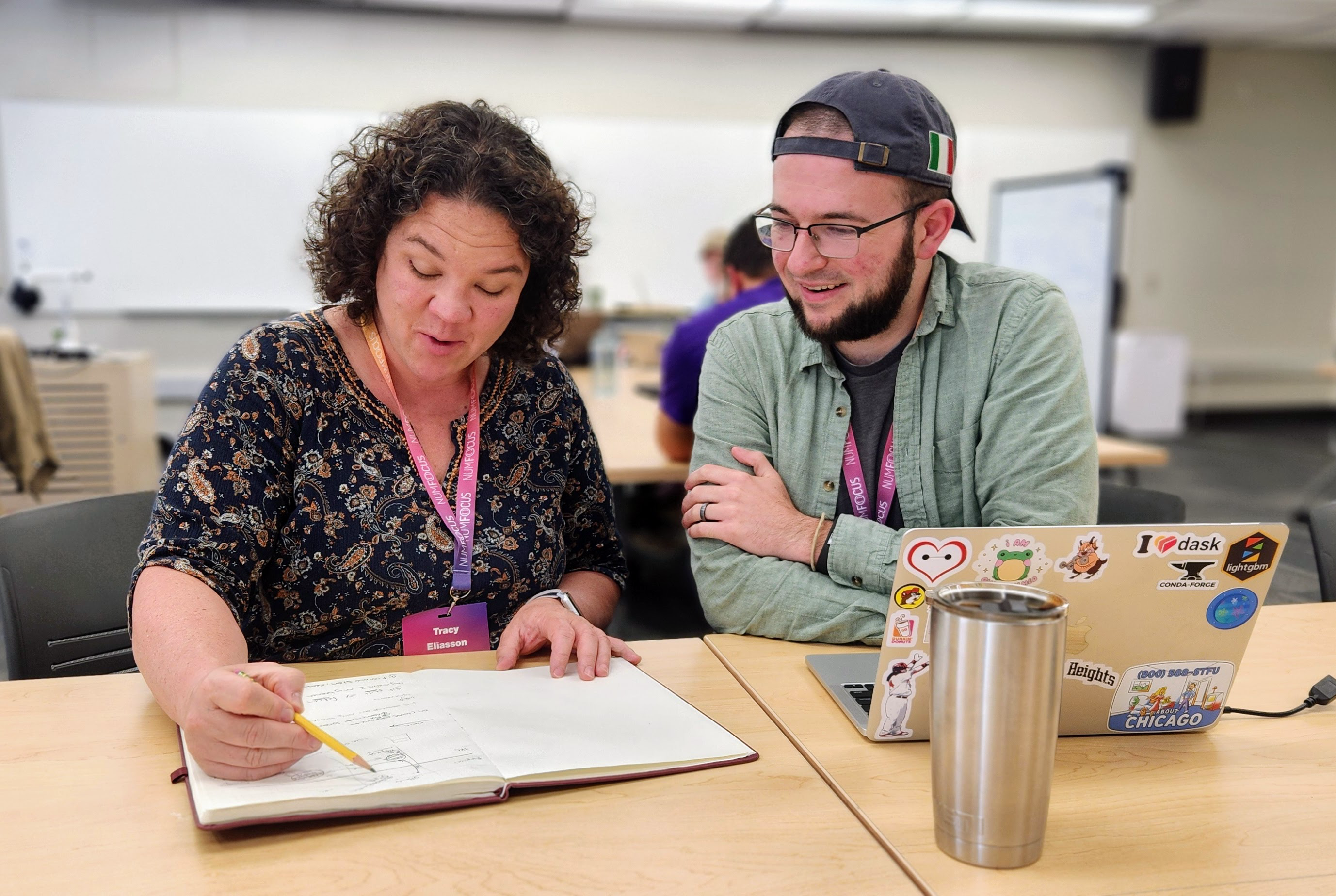
We had record attendance at that sprint compared to previous years! The large group self-organized. Tables moved. Whiteboards filled with ad-hoc lessons on Git and GitHub. Experienced contributors mentored newcomers.
I think about the colleague who sat down, saw the size of the sprint group, and asked—“how can I help?”. He spent the day working with other sprinters, helping them make their first contributions to open source.
This is one example of how baking structure and strong value systems into a community can yield incredible returns. The community members show up for each other because that is just how pyOpenSci operates. It’s who we are, and it’s magical.
Community members show up for each other because that is how pyOpenSci operates. It’s who we are and it’s magical. {: .highlight-quote .magenta }
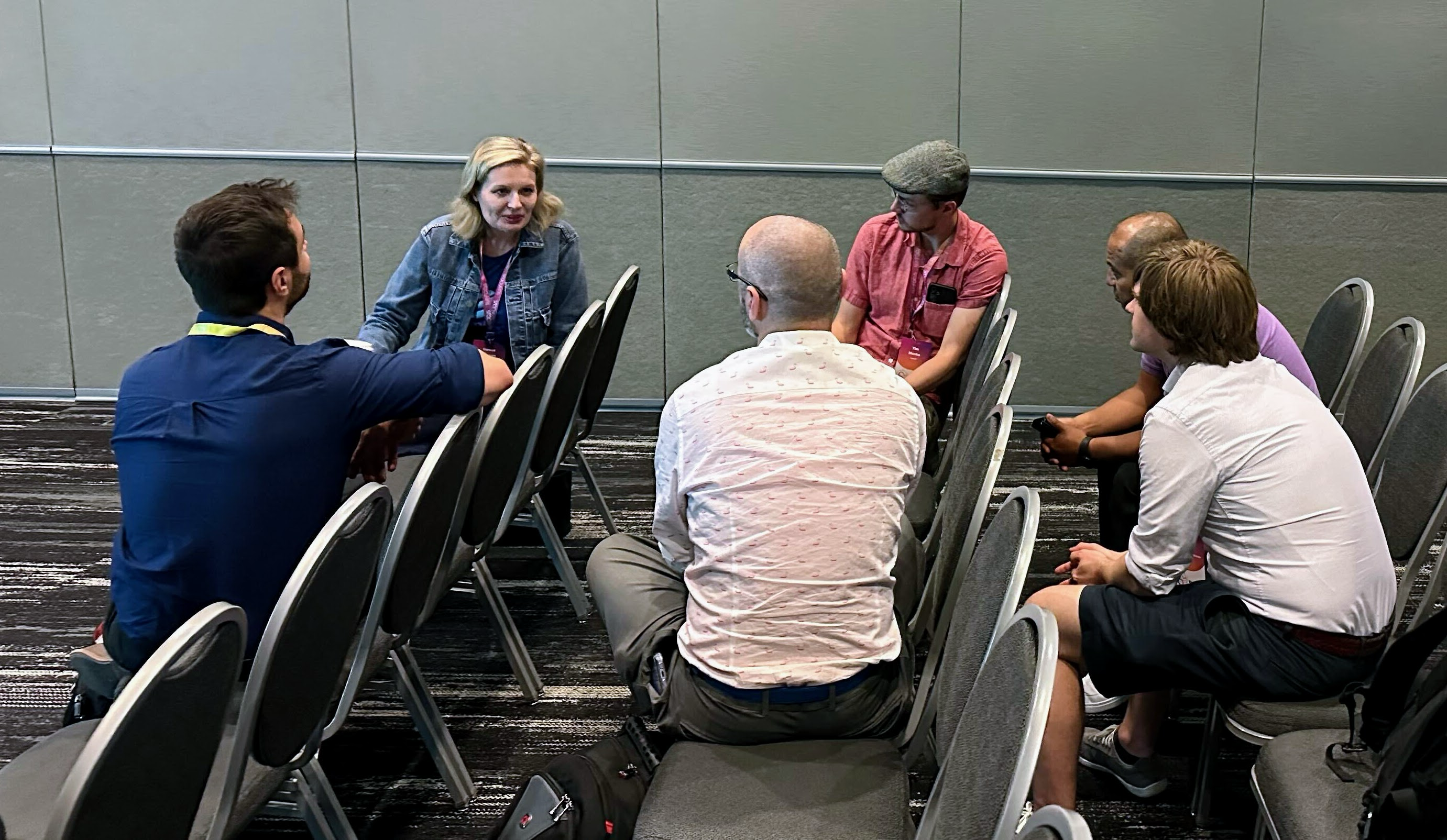
That day felt like the manifestation of a blueprint. It showed what happens when you create the right environment and empower a community to help each other. That model— shared ownership, peer learning, mutual support—changed how I think about building sustainable infrastructure and community.
Resilience is about building inclusive spaces for people to both engage, learn, and support each other.
What we’re building in 2026
Shifting how we think about sustainability
One of the clearest lessons from 2025 is that a grant-dependent model alone can’t support the community-centered infrastructure pyOpenSci is building. Grants will always matter, but they can’t be the only pillar holding us up.
As we move into 2026, pyOpenSci is shifting toward a more diversified sustainability plan–one that centers on training, sponsorship, and community support. And as always, our focus will remain on human-centered growth and development, which is particularly critical in our current moment of Generative AI-driven rapid change.
Value-alignment will continue to be critical as we make this shift.
Training that connects people and builds responsible practice
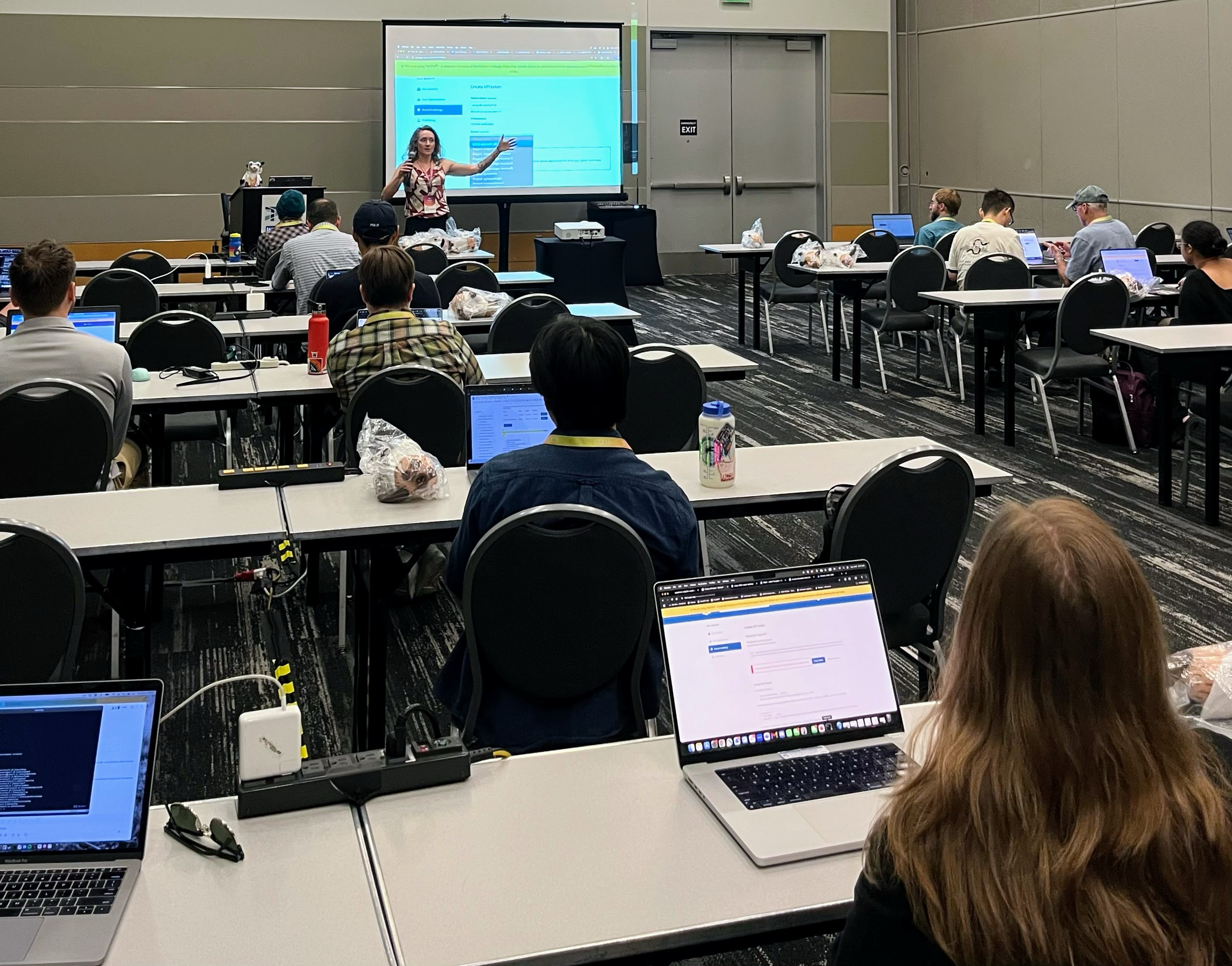
In 2026, we’re investing in a new type of training: programs that bring researchers from around the world together to learn both software development best practices and the responsible use of Generative AI in scientific and open source workflows. The training will be held asynchronously to reduce barriers to participation and increase accessibility. And it will feature incredible leaders in the open source community in an effort to connect learners to the real heart of Open Source–people.
We’re piloting this new training format through our partnership with Stanford’s Open Source Program Office (OSPO). Building on the momentum, we’ll expand this model to other university OSPOs, leveraging the strong connections within the CURIOSS network and building an organizational membership program that supports researchers at scale. While our courses will initially be designed for OSPO researchers they will be valuable to anyone looking to develop the open source and responsible us of Generative AI skills that are in high demand in today’s tech-driven job market.
Generative AI can support open source workflows, but it can’t fully replace the thought, design, and vision that only a human can implement. It also can’t replace mentorship, care, and compassion—human parts of the tech world that both fuel the open source ecosystem and are also straining the fragile social web that supports it. Our training will continue to emphasize foundational open source skills, critical thinking and shared open source norms and workflows.
Our goal is to create learning spaces that reduce isolation, build confidence, connect learners to the humans that drive open source, and strengthen the communities behind scientific software.
The people who make this possible
None of what we learned in 2025—or what we’re building toward in 2026— happened in isolation.
I’m deeply grateful to our 2025 Executive Council, Karen Cranston and April Johnson, for their steady guidance and support as we navigated a challenging year. They encouraged me to embrace sustainable leadership and supported me as I developed new programs to ensure our long-term sustainability.
Our Editors-in-Chief—James Balamuta, Eliot Robson, and Lauren Yee— led the peer review process through a period of rapid change, navigating AI-fueled submissions while keeping quality and care at the center. Carter Rhea stepped up as an editor numerous times, supporting volunteers who were overburdened and leading one of our largest reviews—Astropy—which was just accepted in early 2026.
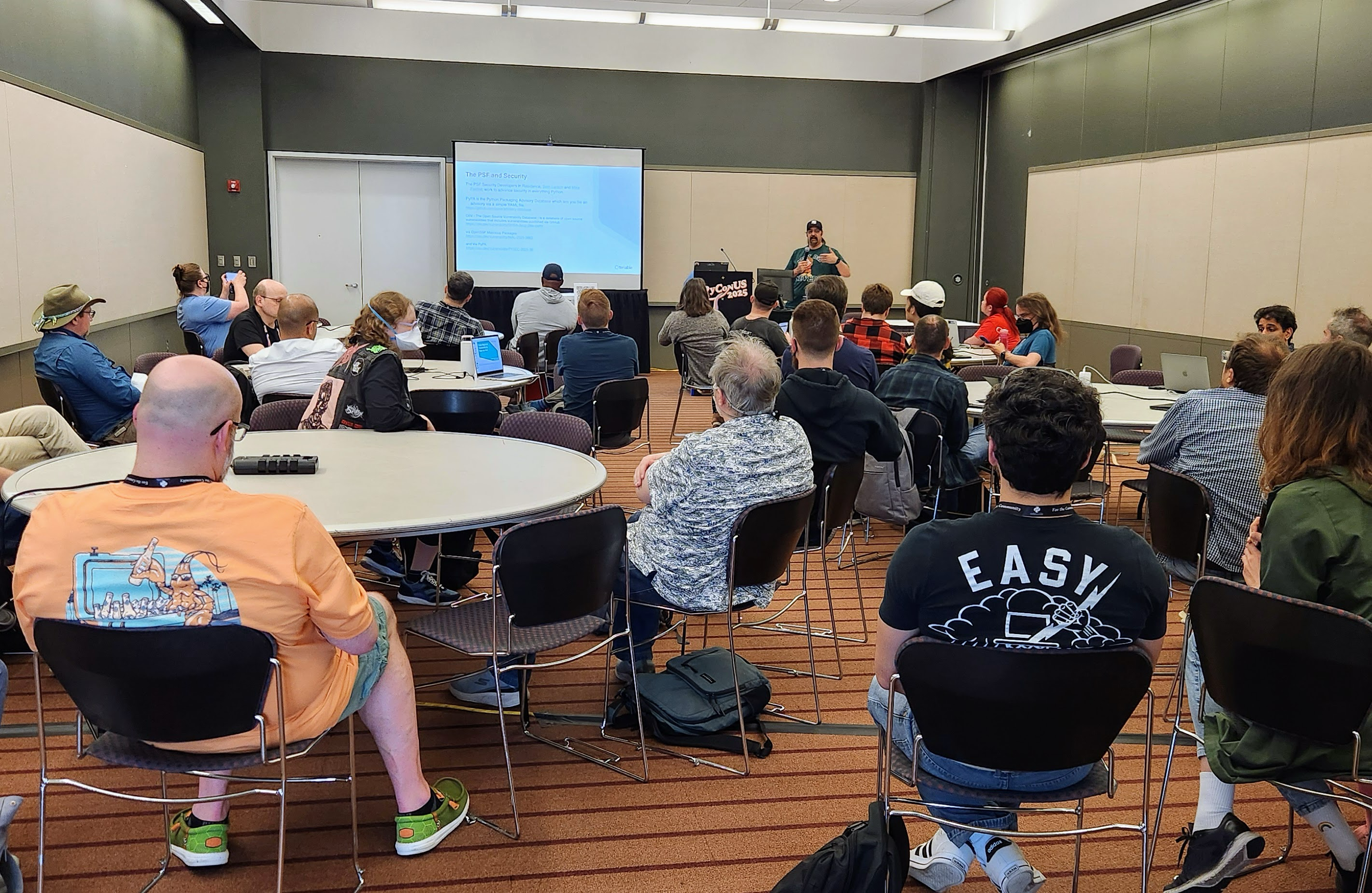
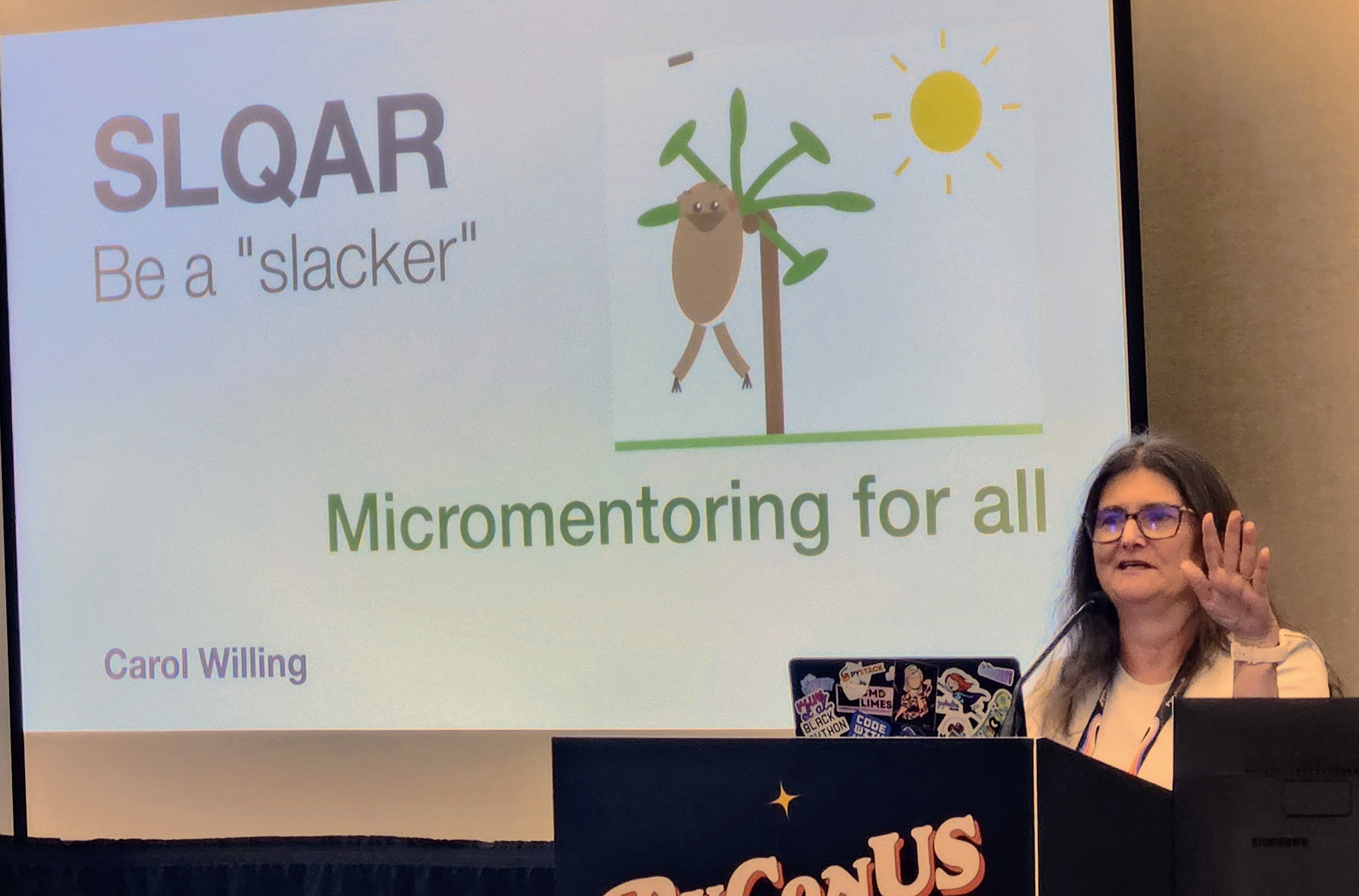
Members of our Advisory Council—Carol Willing, Inessa Pawson, and Chase Million— helped me think through sustainability, partnerships, and long-term direction with wisdom and generosity.
And to the many community members who contributed through reviews, workshops, sprints, writing, mentoring, and quiet acts of support—thank you. This organization exists because you choose to show up.
Community matters most
When things are uncertain, community infrastructure matters most. It’s how people find support that institutions can’t provide. It’s how knowledge gets shared when traditional collaboration pathways break down. It’s how we take care of each other.
That SciPy sprint showed me what’s possible. When you create spaces where people can show up, learn together, and support each other—when you do that consistently—the community becomes the infrastructure.
This is how we build resilience. This is how we help make the world better. Together.
Keep reading
Hello from Shauna — joining pyOpenSci as Research and Community Lead
Meet Shauna Gordon-McKeon, our new Research and Community Lead! A longtime member of the Python and open science communities, she’ll support peer review and community operations alongside research on …
Read moreUN Open Source Week 2026: The Power of Connection
At UN Open Source Week in New York City, maintainers, policymakers, and community leaders wrestled with AI, digital sovereignty, and security — and kept coming back to the same truth. The tools we …
Read moreGenerative AI and open source: what PyCon US 2026 taught us about the path forward
Generative AI was a dominant theme at PyCon US 2026 — not as a buzzword, but as a lived reality the Python community is actively wrestling with. From our pyOpenSci open space to the Maintainers Summit …
Read more