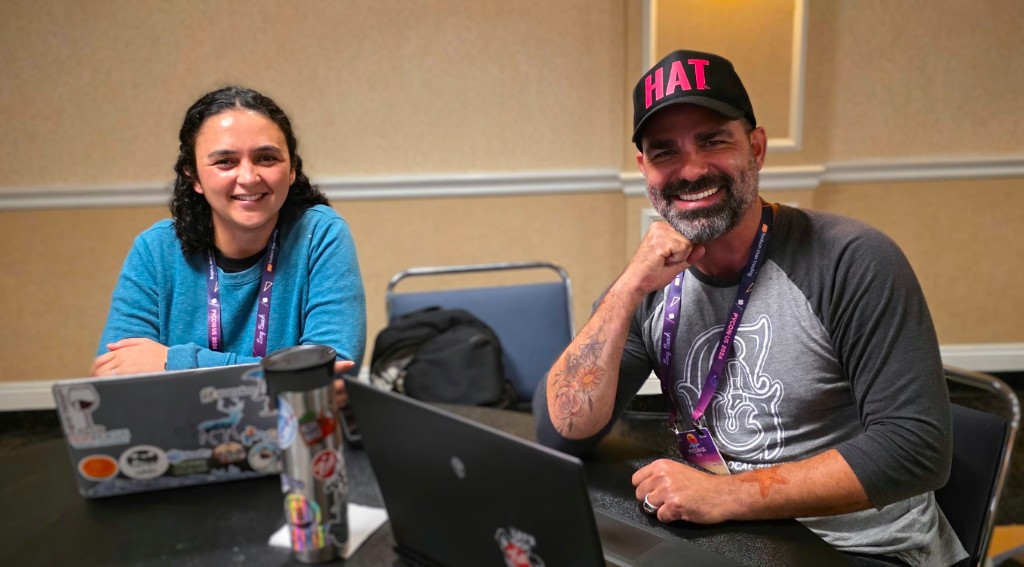
PyCon US 2026: Community, connection, and what comes next
May 21, 2026 • Community
Times are hard, but communities like pyOpenSci still show up. At PyCon US 2026 in Long Beach, we saw people connecting, sprinting, and supporting each other—and why the humans are what make open source work.
Times are hard right now. Communities like pyOpenSci matter more than ever. We saw it at PyCon US this year — the political strain, the GenAI hype cycle and anxiety, the rapid changes reshaping open source. People are tired. People are frustrated. But here’s what else we saw: people still showing up. Still connecting. Still supporting each other.
When things get hard, when the ground shifts beneath us, we need each other more than ever. We need spaces to connect, to learn together, to solve challenging problems as a community. PyCon reminded me why I love this work so much.
I’ll never forget my very first PyCon in Salt Lake City. I was intimidated. It’s a really big conference, and I only knew a few people. That first sprint? We had one person show up who wasn’t already part of our community. He sat down and spent the entire day working on our website, helping us improve our infrastructure. He gave his time to help a nonprofit organization like pyOpenSci grow.
Read more about that first PyCon experience in Salt Lake City.
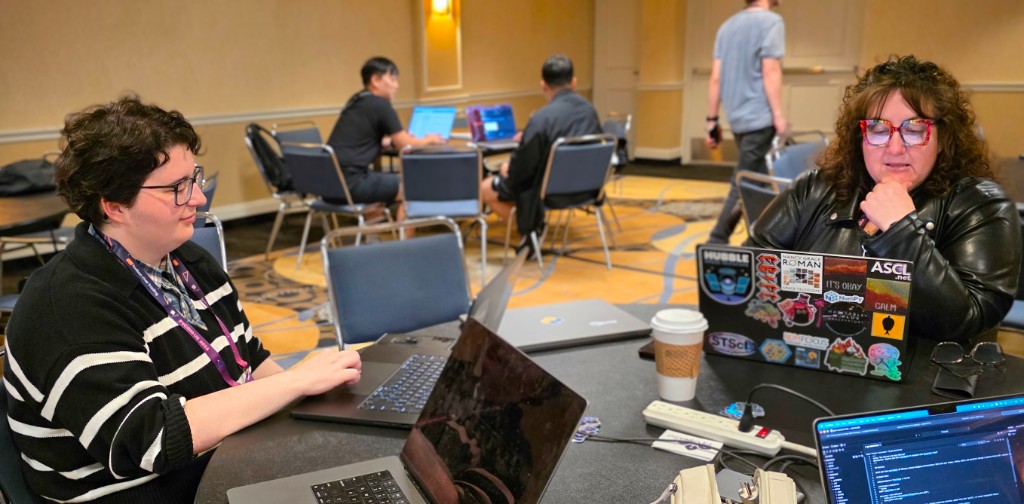
Fast forward three years to Long Beach, California. We filled rooms with our open spaces. We had tables of people sprinting, working on pyOpenSci projects, learning together. People who attended multiple sprints with us — people I remembered struggling to submit their first pull request, now confident in their GitHub skills. This is what community support looks like. This is what pyOpenSci’s mission is all about: helping people grow. Read about the Maintainer Summit and the full sprint story from PyCon US 2026.
PyCon US has become my favorite conference. Not because of the topics covered or how it’s organized, but because of the people. The people who were strangers a few years ago and have now become my closest friends and colleagues. The hallway conversations. The way people show up for each other.

Even in a hard year — especially in a hard year — I left the conference feeling fulfilled, feeling whole, and so grateful for the friendships and relationships I’ve deepened over time.
In this series
Part 1: Community, connection, and what comes next — You’re reading it. An overview of PyCon US 2026 and why the people in the room are what make open source work.
Part 2: The Maintainer Summit — A milestone year for the summit: formal PyCon registration, 150+ maintainers, and roundtables on packaging, security, and generative AI.
Part 3: The sprints — From one person in Salt Lake City to a room full of contributors working together. Growth, learning, and community in action.
Part 4: Generative AI and open source — GenAI was everywhere at PyCon this year. Not as hype, but as a real challenge the community is wrestling with. Between our open space, the Maintainer Summit BoF, and Amanda Casari’s powerful closing keynote, a theme emerged: the path forward is human.
What it all comes down to
If there’s one thing that tied all of these experiences together, it’s this: the humans are what make open source work. The tools change, the challenges evolve, but the connections, the learning, the care people bring to this work — that’s the irreplaceable part.
Keep reading
Hello from Shauna — joining pyOpenSci as Research and Community Lead
Meet Shauna Gordon-McKeon, our new Research and Community Lead! A longtime member of the Python and open science communities, she’ll support peer review and community operations alongside research on …
Read moreUN Open Source Week 2026: The Power of Connection
At UN Open Source Week in New York City, maintainers, policymakers, and community leaders wrestled with AI, digital sovereignty, and security — and kept coming back to the same truth. The tools we …
Read moreGenerative AI and open source: what PyCon US 2026 taught us about the path forward
Generative AI was a dominant theme at PyCon US 2026 — not as a buzzword, but as a lived reality the Python community is actively wrestling with. From our pyOpenSci open space to the Maintainers Summit …
Read more