UN Open Source Week 2026: The Power of Connection
Jul 6, 2026 • Community
At UN Open Source Week in New York City, maintainers, policymakers, and community leaders wrestled with AI, digital sovereignty, and security — and kept coming back to the same truth. The tools we depend on are built and maintained by people, and community is what makes any of this possible.
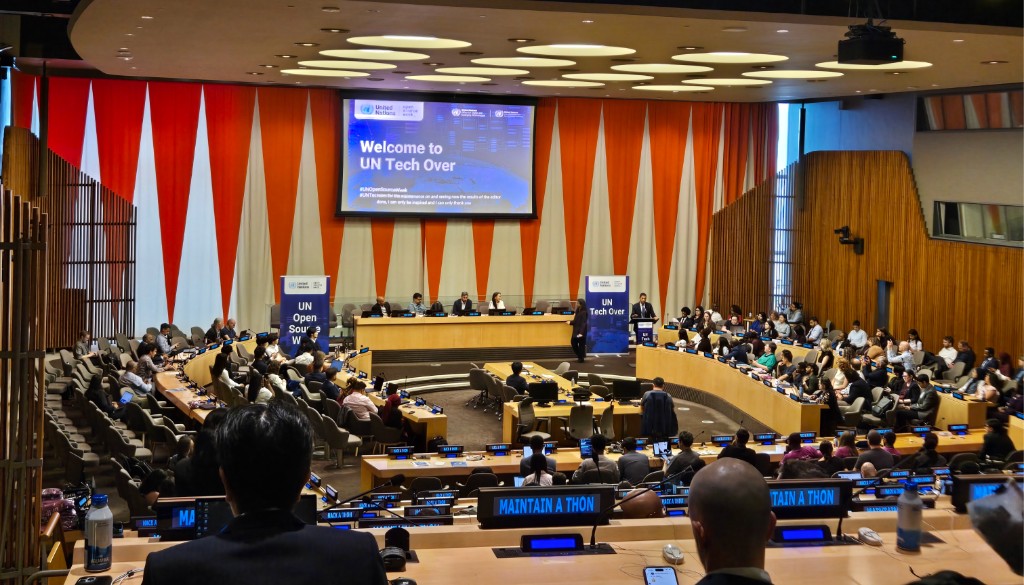
I spent last week in New York City at UN Open Source Week as a featured maintainer, supported by the Sovereign Tech Agency. It was my second year attending, and coming back with this group of maintainers that Sovereign Tech brings together made the experience even more powerful.
The thing I’ve learned from a decade of being a maintainer and supporting other maintainers is this: we rarely get to connect in person. Open source is global and distributed. We work across continents, across time zones, often in isolation.
UN Open Source Week is one of the few places where that changes. Maintainers, community builders, leaders, and policymakers from across the entire open source ecosystem show up in one room, all focused on the same thing. And that’s where the real magic happens.
The maintain-a-thon
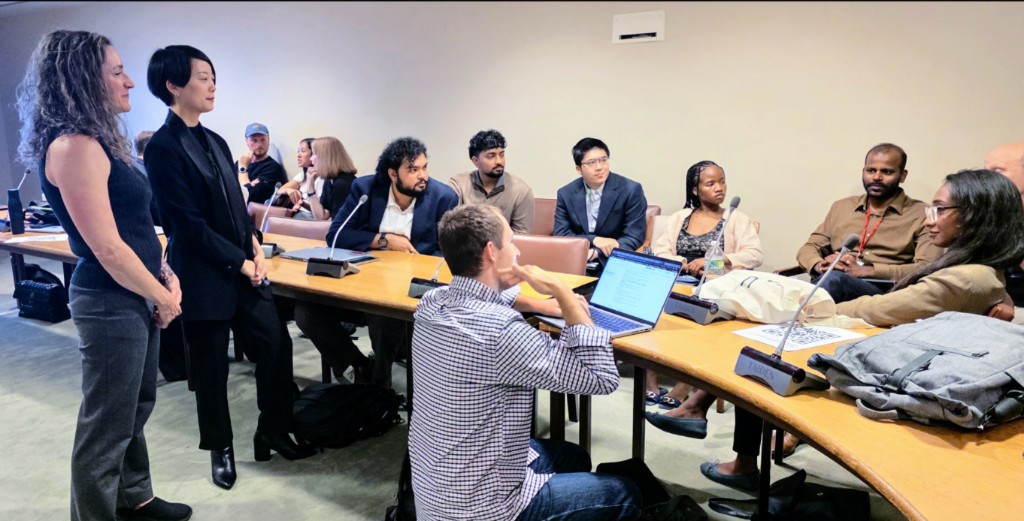
The week kicked off with Maintain-a-Thon, organized by Sovereign Tech Agency. The Maintain-a-Thon is a day devoted to maintainers from around the world — we connected, discussed challenges and opportunities, and ran an afternoon of sessions together. It was by far my favorite day of the week.
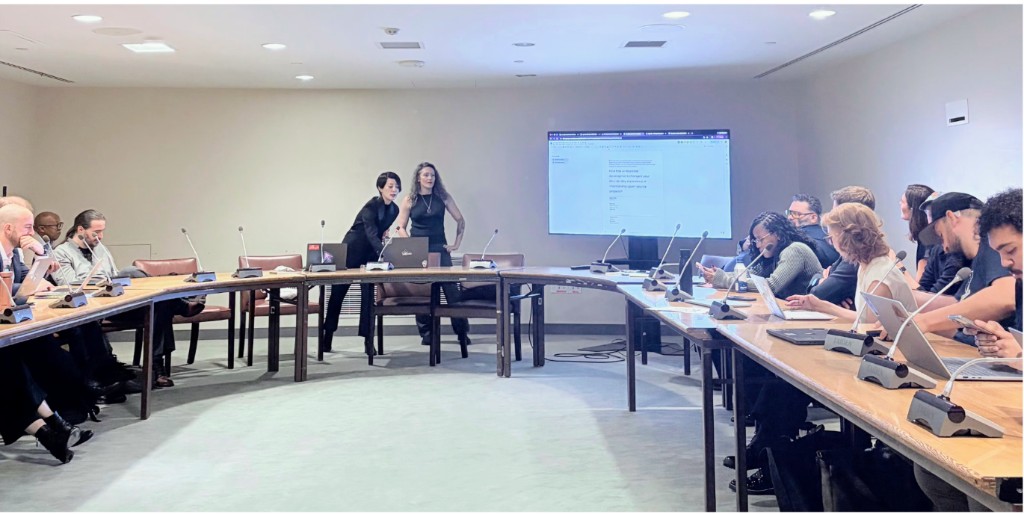
I co-led a session focused on AI tools in open source with Qianqian Ye, Creative Director for the Processing Foundation. We had a full, engaged, energetic room of close to 50 people! The session was interactive — we started by discussing the current state of AI tools in open source and gathered feedback from the room using an interactive Mentimeter slide deck.
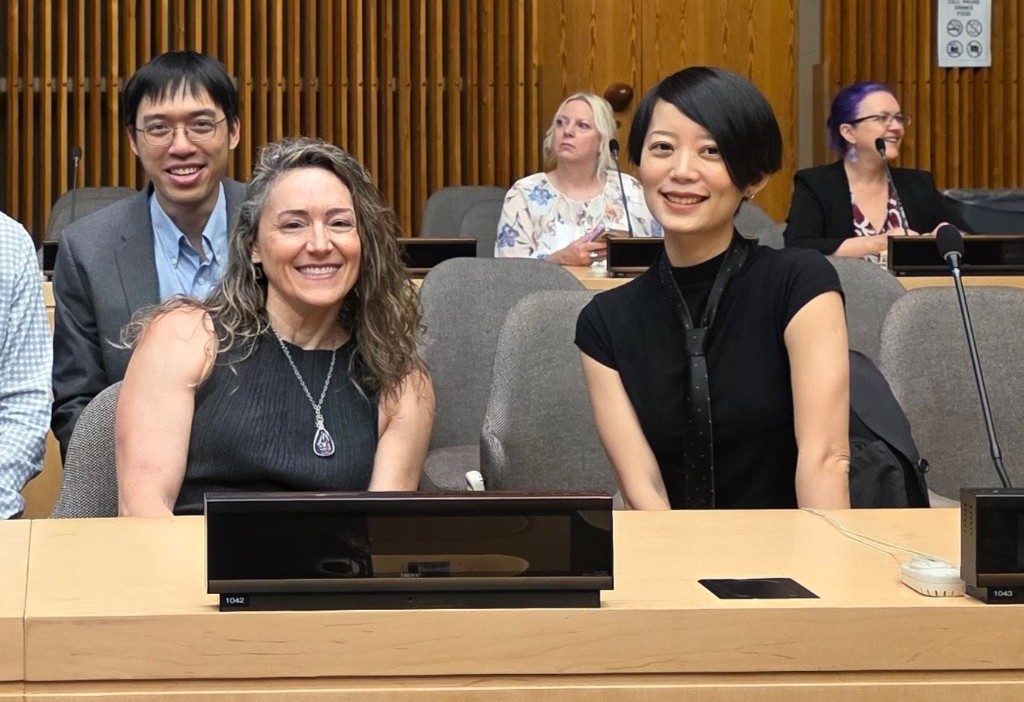
Q and I broke the room into four groups and asked two questions:
- how has AI changed your open source workflows, and
- what’s actually working to push back?
The room erupted with energy — conversations spilled past the time limit, and we practically had to pry people away from their tables for the final report-out. A few takeaways from the session included:
- the volume of inbound contributions is growing while maintainer capacity stays flat,
- trust is eroding as PRs disconnect from real intent, and
- no tool can replace the human relationships that hold a community together.
But communities are starting to create tools, policies, and processes to manage AI in open source:
- AGENTS.md files — a growing open standard (agents.md) for giving AI coding agents project-specific context and boundaries, right in the repo.
- Explicit generative AI contribution policies — like the one pyOpenSci built for our own peer review process (our policy), setting clear expectations for disclosure and use.
- Contributor ladders tied to demonstrated activity — shifting trust and access based on a track record of real contributions, not just PR volume.
- AI-assisted pre-review tools — like CodeRabbit, which catch issues before a PR ever reaches a human reviewer, reducing maintainer triage load.
Seth Larson from the Python Security Foundation led a session on security and AI. Mike Fiedler talked about the challenges and work happening on PyPI. Tim Lehnen talked about the challenges of Drupal’s huge contributor community and how they manage donations and support from corporate entities that use Drupal. The corporate / open source interface is such a fascinating and tricky problem to navigate for many projects. The entire day, including lunch, was filled with deep discussion and connection.
I think these types of events, for maintainers who tend to work remotely and in isolation through the day, were energizing — particularly at a time when the world feels a bit more challenging.
Breakfast at the German house
One morning started with breakfast at the German house, hosted by Adriana Groh, the Executive Director of the Sovereign Tech Agency. We sat with Adriana and other German political leaders.
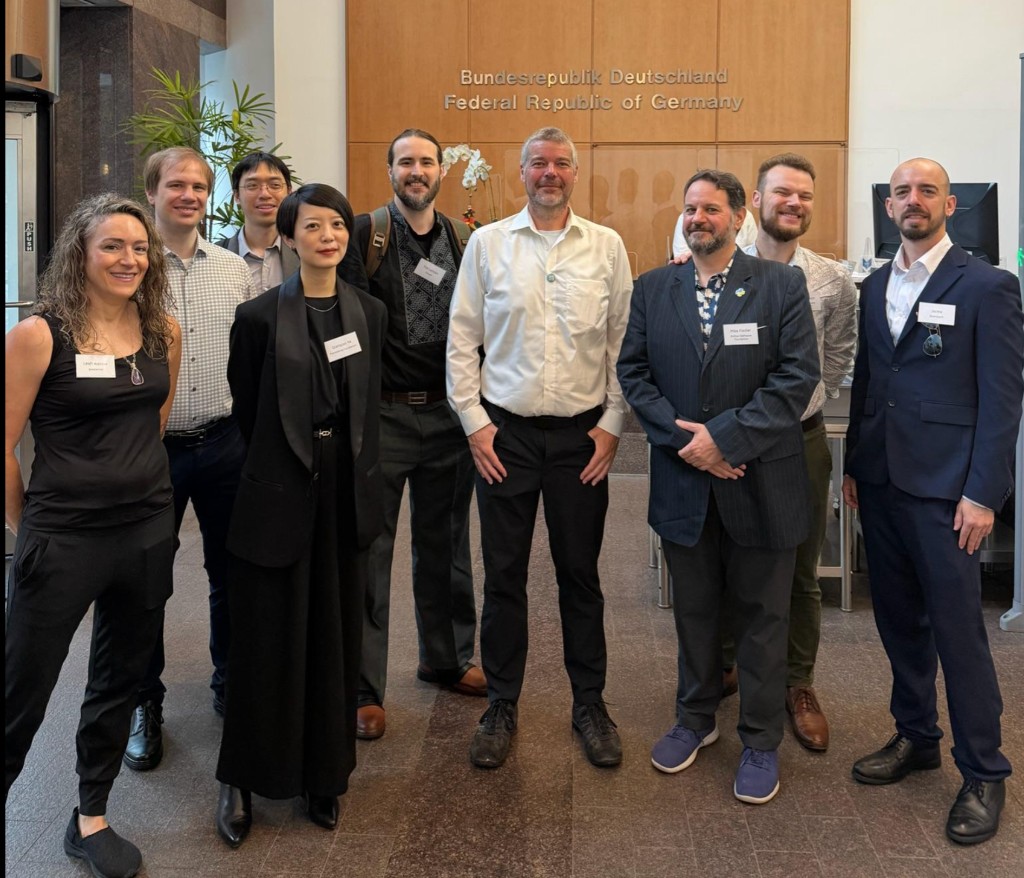
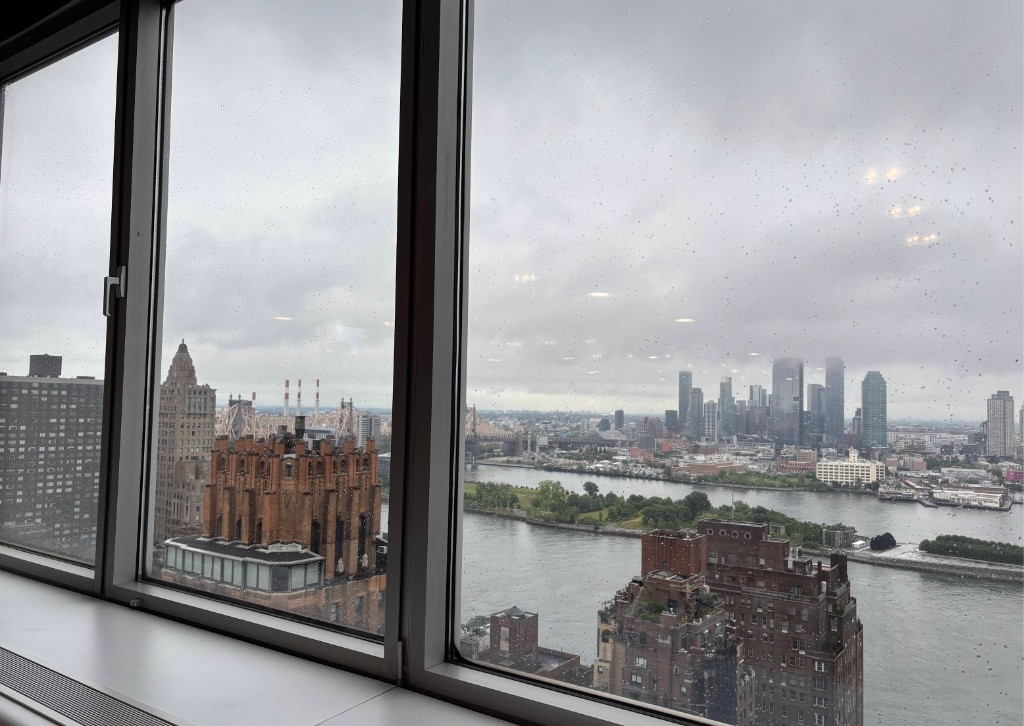
This was an incredible moment — we weren’t just talking to other maintainers, but to political leaders who shape policy, who fund initiatives, who set the conditions for open source to thrive globally. That’s a kind of connection most other meetings don’t have.
Other sessions and events
The rest of the week was full — sessions on OSPOs, digital public infrastructure, and a Community Day filled with sessions led by on-the-ground open source leaders.
One of the standout moments was AI for Good day. Yann LeCun gave a talk, alongside other leaders in AI research and business. There was even a visionary robot in the room. It was a very different energy — more high-level, more forward-looking — but a fascinating counterpoint to the ground-level maintainer conversations earlier in the week.
Why this matters
UN Open Source Week is rare because it bridges something that usually stays separate. You get time with other maintainers — people facing the same challenges you are, doing similar work in different languages and ecosystems. And you get time with leaders and policymakers who can actually shift resources, change policy, amplify what you’re doing.
But if I’m honest, the most powerful track all week wasn’t any single session — it was the hallway track. The conversations over lunch, the breakfast tables, the moments between sessions where you actually get to know someone. That’s where trust gets built, and where the real work of connecting a global, distributed community actually happens.
One of the things that’s been really rewarding is getting to know the maintainers that Sovereign Tech supports. Over the past year or two, we’ve been building real bonds — not just professional connections, but actual friendships. We’ve had dinners and breakfasts together, sat and really talked about issues and challenges that we are facing in our projects and communities.
The end of a long but amazing week
Coming back on Saturday, I was exhausted — the kind of beautiful exhaustion that comes from a week of real connection and deep conversations. This event always brings to life why community work, like the work we do at pyOpenSci is so critical.
It is critical infrastructure beyond just code.
I’m grateful to Sovereign Tech Agency for making this possible, and to everyone I got to sit with and talk to the other week.
Keep reading
Hello from Shauna — joining pyOpenSci as Research and Community Lead
Meet Shauna Gordon-McKeon, our new Research and Community Lead! A longtime member of the Python and open science communities, she’ll support peer review and community operations alongside research on …
Read moreGenerative AI and open source: what PyCon US 2026 taught us about the path forward
Generative AI was a dominant theme at PyCon US 2026 — not as a buzzword, but as a lived reality the Python community is actively wrestling with. From our pyOpenSci open space to the Maintainers Summit …
Read moreIt started with one contributor and now we fill the room: pyOpenSci sprints at PyCon US 2026
Our fourth PyCon US sprint grew from a single contributor in Salt Lake City to ~20 people in Long Beach. Co-sprinting with Hatch, welcoming beginners, and a new Portuguese packaging guide translation …
Read more