
How to Run 160 km: Building Resilience When Things Feel Hard
Nov 12, 2026 • Leah Wasser
AI tools are creating new challenges and opportunities for open source maintainers and contributors. Here, Leah talks about how to build resilience during hard and rapidly changing times in a keynote given at EuroPython 2026.
Many of us are tired right now. AI tools are changing how we write, review, and maintain software, and the pace of change is fast. We are also seeing new strains in communication, as it can be hard to tell whether an account belongs to a human or an AI.
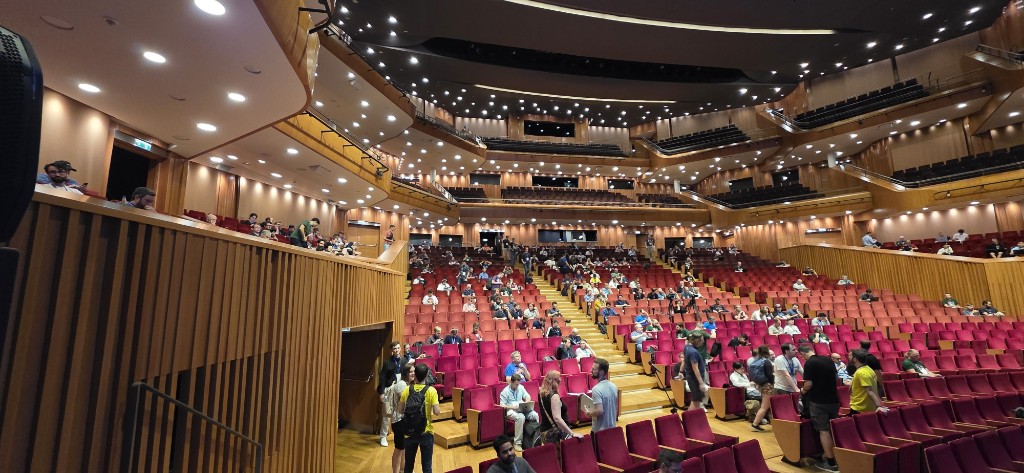
In July, our executive director, Leah Wasser, gave a keynote at EuroPython in Kraków on what ultrarunning taught her about staying resilient through times like this. Watch below or read on for the key takeaways, and for why this matters to the community we support at pyOpenSci.
Download the slides: EuroPython 2026 Keynote - Building Resilience When Things Feel Hard.
Before the conference, EuroPython filmed this short with Leah at PyCon US.
Stress is stress, and noise makes it worse
Your body doesn’t care whether stress comes from a hard run, a job search, or a flood of new pull requests for AI fueled bots. Your body reads all the noise the same way. What makes it harder is noise: reactions to incomplete information. For example on GitHub, it’s hard to tell whether an account is a human or AI. On Leah’s first 160 km run, she once froze in the dark, certain she was surrounded by mountain lions. They were actually sleeping cows. One scare is survivable. The same jolt over and over wears us all down down and becomes increasingly harder to recover from.
Maintainers are being asked to react to AI claims they can’t verify. At pyOpenSci, we are collecting data to try to better understand what is happening int he community and what we can do about this together. So we can tell the cows from the mountain lions and act (no re-act) accordingly.

Resilience is built, not found
When you train for hard things, you intentionally stress your body over and over, in doses it can recover from. Rest is when you recover and get stronger. Stress, rest, adapt, resilience.
The catch with AI is that none of us trained for it. The course is undefined, nobody has marked the aid stations, and it’s hard to find space to rest and recover. That’s hard, and it is still something we can do. At pyOpenSci, we are building guidelines for using AI tools well, grounded in data on how maintainers and contributors adopt them. We see those guardrails as aid stations.

See through the noise
Not every signal needs your full attention. Part of resilience is deciding which signals to listen to and which to let go. Sometimes that means staying the course when everything says to quit. Fires nearly kept Leah off a trail she had trained eight months for, and pushing through that noise gave her one of the best experiences of her life. Other times the noise points you somewhere new. Years of doubt during her PhD pushed her out of academia and toward the work that became pyOpenSci.

If you feel redirected right now, consider where the redirection is actually taking you. You may not be lost. You may actually be on the trail.
You can’t do it alone
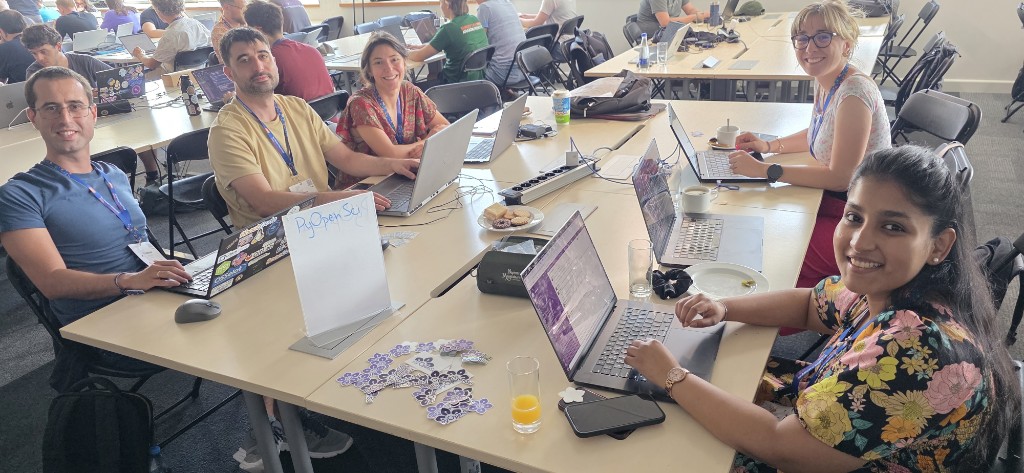
Support systems are what make hard things possible. On long runs, they’re aid stations: someone with food, dry clothes, and, on one very memorable day, a Coke. In open source and in research, they’re mentors, friends, and communities that make room for newcomers. These people are often the difference between someone staying in a field and leaving it. At pyOpenSci, peer review, sprints, and our community are that support.
Human connection matters more in the age of AI, because the work is faster and the social part is easier to skip. A conference is a good start. The next step is a smaller circle you can reach after you go home: colleagues, a local group, people who know your work and tell you the truth.
Take one step at a time and don’t worry about the finish line
Big goals feel impossible when you stare at the finish. On a long trail, Leah’s feet blistered, her brain said stop, and she was ready to quit. Slowing down and focusing on the next step changed everything. She didn’t know how she would finish. She only needed to know she could keep going.
pyOpenSci grew this way too. It started with a few people meeting, then a few more, and years later it’s a global community of contributors and maintainers.
Choose on purpose, and rest
You can adopt AI tools when they’re genuinely useful, or leave them alone. What matters is noticing how that choice affects you and the people around you. And take breaks. Adaptation happens during rest, and skipping it leads to burnout.
Know your north star
When the noise gets loud, a clear goal helps you filter it. At pyOpenSci, ours is protecting our volunteers and helping researchers build better research software so science can move faster. What is yours? Protecting a maintainer team, carrying a project forward, building something new, or chasing a question that matters?
If you want to get involved with us
pyOpenSci is studying how AI is changing maintainer and contributor work, with funding from the Alfred P. Sloan Foundation. We’re running focus groups and surveys and building guidelines and practical tools with the community, the aid stations we talked about above. If this is your ultra too, follow along at pyopensci.org or find Leah on GitHub and LinkedIn.
You will find your way. Better yet, we will find it together.
When the Human Disappears: What Maintainers Told Us About AI Contributions at EuroPython
At EuroPython 2026, fifteen maintainers talked for more than two hours about how AI tools are changing open source. The conversation kept returning to the loss of human connection.
Read morepyOpenSci Funded to Tackle Thoughtful Adoption of AI Tools in Scientific Open Source
The Alfred P. Sloan Foundation has funded pyOpenSci to study how AI tools are changing scientific open source, and to build practical guidance that helps contributors and maintainers use them …
Read moreHello from Shauna — joining pyOpenSci as Research and Community Lead
Meet Shauna Gordon-McKeon, our new Research and Community Lead! A longtime member of the Python and open science communities, she’ll support peer review and community operations alongside research on …
Read more